
DIY removal guide
Can I remove spray foam insulation myself? What's safe and what isn't
Nothing in law stops you removing spray foam from your own loft, but it is rarely a sensible DIY job. The foam is often bonded to the roof membrane and timbers, it can hide cables, and a removal with no written record may not satisfy a mortgage lender. Here's what's involved and what you can safely do yourself.
Written and reviewed by the Roof Insulation Solutions team. Sources checked 25 November 2026.
The short answer
Can you remove spray foam insulation yourself?
You can legally remove spray foam from your own loft, but most guidance advises against it. The foam is often stuck to the membrane and timbers, and lenders are cautious: earlier research by the HomeOwners Alliance and the BBC found some large lenders would not lend on a home with retrofitted spray foam, so a removal needs a clear record.
The Property Care Association (read November 2026) describes removal as "a complex and expensive process, often requiring specialised equipment and expertise", and notes that some mortgage companies refuse to lend on a property with sprayed foam on the roof. Cost guides say much the same: the BestBuilders cost guide (2026) calls DIY removal "legal but rarely sensible", and MyJobQuote (September 2026) says it's not recommended.
Not every foam needs to come out at all. Our guide, Is spray foam insulation bad?, covers when it causes problems and when it may be fine to leave.
The risks
Is spray foam removal dangerous?
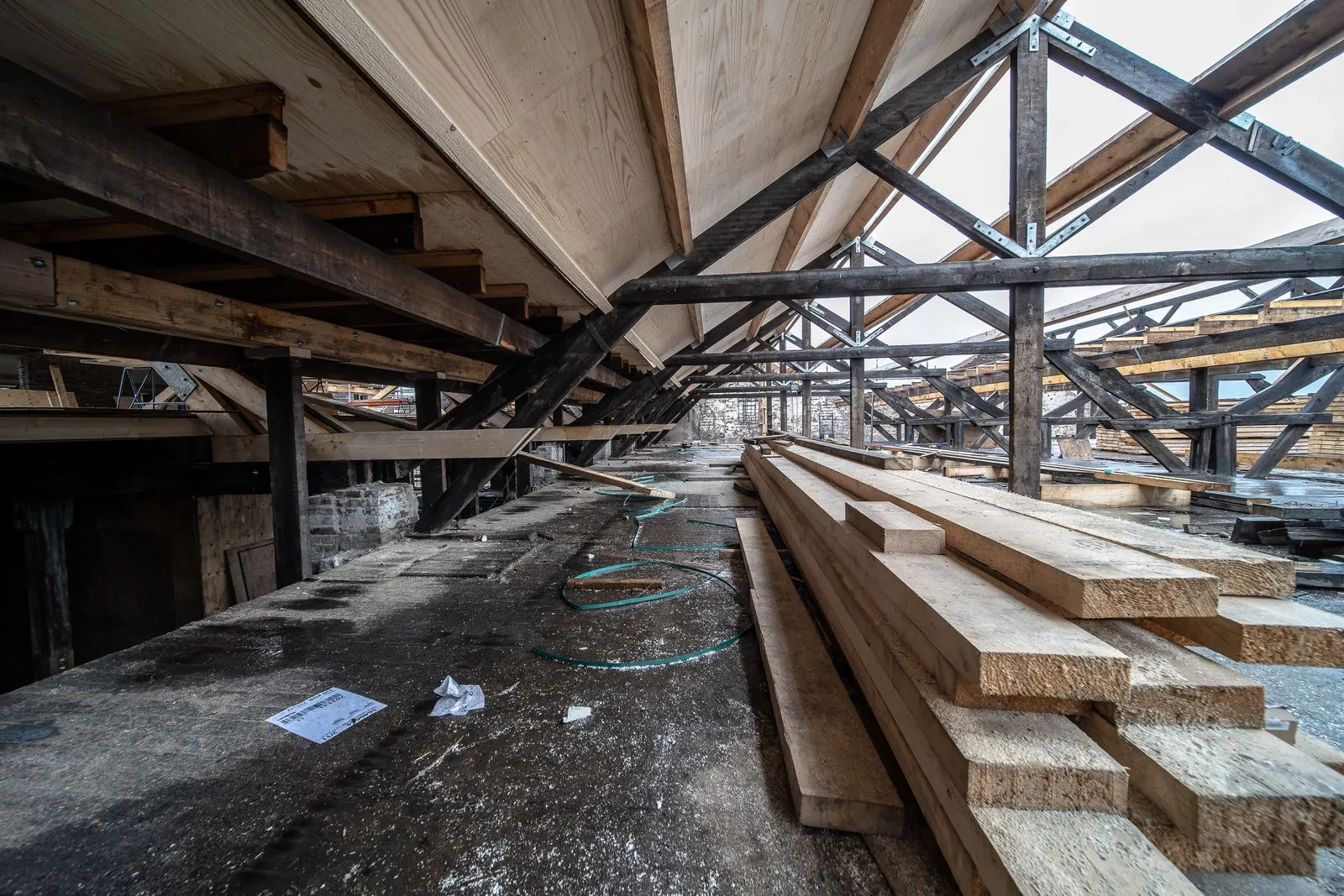
Spray foam removal is risky mainly because of where the work happens and what the foam is stuck to. You work overhead on a fragile loft floor, cables can be buried in the foam, and tearing the membrane is costly: BestBuilders (2026) prices a new membrane or felt at £3,500 to £9,000, because the tiles have to come off.
The biggest DIY risks are falling through the ceiling, tearing the roof membrane, hitting hidden cables and breathing the dust.
Loft floor safety
Falling through the ceiling is a real risk in a loft. B&Q's loft safety advice warns never to stand on the plasterboard because it won't bear your weight, to work from boards laid across the joists, and to have good lighting.
Tearing the membrane, felt or tiles
Foam sprayed onto felt or a breather membrane can tear it when pulled away. BestBuilders (2026) prices replacing perished felt or fitting a new membrane at £3,500 to £9,000, and notes it means stripping and re-laying the tiles.
Wiring and pipes hidden in the foam
Cables and pipes are often buried in spray foam. MyJobQuote (2026) warns of "a real risk of damaging roof timbers, electrical cables, or pipework if the foam is removed incorrectly".
Dust and fumes from spray foam
Spray foam dust is a health concern. HSE (updated January 2026) lists foams among construction products that can contain isocyanates, a known cause of occupational asthma, and says MDI gives off more vapour when heated above 40°C. HSE's controls for this work include ventilation, gloves, eye protection and, where needed, respiratory protective equipment.
Damp or decayed timber under the foam
BestBuilders says perished felt and damp or decayed rafters and battens are common findings once foam comes off.
Heat in a confined loft
B&Q notes lofts can be hot and stuffy in summer and advises regular breaks and keeping a charged phone with you if working alone.

Roof felt
Can you remove spray foam from roof felt without damaging it?
Sometimes, but removing spray foam from roof felt is the part of the job most likely to go wrong. Once foam has bonded to felt or a membrane, pulling it off can rip the layer that keeps rain out, and the repair usually has to be done from outside the roof.
How well the foam lets go depends partly on whether it's open-cell or closed-cell. Closed-cell foam is rigid and grips hard, while open-cell is softer. Our guide to open-cell vs closed-cell spray foam explains how to tell which you have.
Professional removal
What does professional spray foam removal involve?
Professional spray foam removal is planned around protecting the roof and producing a record. The foam type is confirmed first, the home is protected, foam is taken off in a way that limits damage, and the exposed timbers and membrane are checked and photographed before anything goes back in.
A typical sequence starts with an assessment: identifying the foam type and where it's bonded, and looking for cables, pipes and signs of damp. The rooms below are then protected from dust and debris, and access is planned.
The foam comes off with care for the membrane, the waste is bagged, and what's found is photographed. Finally the timbers and membrane are inspected, any repairs are agreed with the homeowner, and suitable insulation goes back in.
See our spray foam removal service, and our guide to what goes back in after spray foam removal.
Side by side
DIY vs professional spray foam removal
DIY spray foam removal saves on labour, though a torn membrane, a damaged cable or a removal your lender won't accept can easily cost more than it saves. Here's how the two compare.
| Issue | DIY removal | Professional removal |
|---|---|---|
| Upfront cost | Your time, equipment, protective gear and waste disposal | Quoted job, usually priced per square metre with repairs and insulation extra |
| Roof membrane and tiles | High risk of tears if foam is bonded to felt or membrane | Planned method, with damage found and reported |
| Wiring and pipes | Hard to see what's buried in the foam | Services located and worked around |
| Dust and fumes | Your own risk, and dust spreads into the house | Controlled working area and protective equipment |
| Waste | Free council allowance is small; a whole loft of foam is bulky | The contractor is responsible for carrying and disposing of it |
| Timber inspection | You may not know what you're looking at | Timbers and membrane checked once exposed |
| Mortgage and sale | No independent record, which lenders may not accept | Photos and a written report you can pass to a lender or buyer |
For published UK price ranges, timescales and what a fair quote should itemise, see our spray foam removal cost guide.
Waste
How do you dispose of spray foam insulation?
Removed spray foam shouldn't go in your household bins. In England, council recycling centres must take householders' own DIY waste free up to two 50-litre rubble bags per visit, for up to four visits in four weeks. A whole loft of foam is far more than that, so larger amounts need a skip or a registered waste carrier.
Keep foam out of your bins, use the council's free allowance only for small amounts, and check the registration of anyone who takes the rest.
Wigan Council's recycling A to Z, for example, says not to put spray foam insulation in any kerbside bin. Rules differ between councils, so check yours first.
The government's 2023 decision on DIY waste charges set that free allowance (or one bulky item per visit instead) for householders working on their own main home. It also says that where a tradesperson does the work, they're responsible for transporting and disposing of the waste.
These rules apply in England. Wales, Scotland and Northern Ireland have their own building and waste regulations, so check with your local council.
Your duty of care for waste
The GOV.UK waste duty of care code of practice says householders must take all reasonable steps to hand waste only to an authorised person, and failing to do so is a criminal offence. Whoever you use, whether a skip firm, a collector or a removal company, it's worth asking for their waste carrier registration. In England these numbers begin with CBDU and can be checked on the Environment Agency's public register or by calling 03708 506 506.
- Don't put foam in kerbside bins
- Check your council's recycling centre rules first
- Ask any firm taking the waste for its carrier registration and check it
- Keep a receipt showing who took the waste
Mortgages & insurance
Will DIY removal affect my mortgage or sale?
DIY spray foam removal can affect a mortgage or sale. Earlier HomeOwners Alliance and BBC research found that some large lenders would not lend on homes with retrofitted spray foam, and no equity release providers would. Lenders want to know the foam has gone and the roof was checked, and a DIY job with no photos or report gives them little to go on.
The Property Care Association says concerns about spray foam have led some mortgage companies to refuse to lend, and it lists surveyors who have shown experience with spray foam in its spray foam assessors category. Which? (October 2026) notes a surveyor may reduce a property's value or ask for a specialist report. Cost guides add the same warning: BestBuilders (2026) says "a removal with no written report and no independent inspection of the timbers afterwards may not satisfy the lender", and advises getting the lender's requirements in writing first.
Lender policies vary. The HomeOwners Alliance (updated April 2026) reports that Skipton Building Society will consider a property once the foam has been removed, while other lenders' criteria refer to paperwork, warranties and being able to get buildings insurance. If you damage the roof or wiring during DIY work, speak to your insurer before assuming it's covered.
Nobody can promise that removal, DIY or professional, will secure a mortgage or sale. Our guide to spray foam and mortgages covers lender stances, independent inspections and what to send your buyer.
Read the mortgage guideWhat you can do
What parts of the job can you safely do yourself?
The safe DIY jobs are the ones that don't involve touching the spray foam. Gathering paperwork, taking photos from the hatch and clearing stored belongings all make a quote quicker and more accurate, and help you ask any company better questions.
- Take photos of the foam from the loft hatch
- Find the installation paperwork and any guarantee
- Clear stored boxes and belongings from the loft
- Note damp patches or mould on ceilings below
- Ask your lender or broker what evidence they need
- Get more than one written quote before deciding
Take photos from the hatch ladder or boarded areas, and leave the foam itself alone. If you'd like a first opinion, send us one or two photos from the loft hatch and we'll tell you what we can see.
FAQs
DIY removal questions
Answers based on the sources linked above.
Not sure what's in your loft?
Send us one or two photos from the loft hatch and we'll talk you through it.
Get adviceIs it legal to remove spray foam insulation myself?
Yes, there's no law against removing it from your own home. Cost guides and the Property Care Association still describe it as specialist work, and you remain responsible for disposing of the waste properly.
Will DIY removal satisfy my mortgage lender?
Possibly not. Lenders usually want evidence that the roof was inspected and any damage repaired, and a DIY job rarely comes with a written report or photos. Ask your lender or broker what they need before any work starts.
Can spray foam go in my household bin?
No. Councils such as Wigan say it shouldn't go in kerbside bins. Small amounts of your own DIY waste can go to a council recycling centre, but a whole loft usually needs a skip or a registered waste carrier. Outside England, check your council's rules.
Can I tell which foam I have before deciding?
Usually, yes. A gentle press with a gloved finger tells soft open-cell from hard closed-cell foam. Our guide to open-cell vs closed-cell spray foam explains the check and why the type matters for removal.
What tools are used to remove spray foam?
It depends on the foam. Open-cell is softer and closed-cell bonds hard to timber, so professionals choose methods that protect the membrane and cables. We don't recommend buying tools to attempt it yourself, because the main risk is damage to the roof.
Is cured spray foam dangerous to breathe in?
HSE lists foams among construction products that can contain isocyanates, and cutting or scraping any foam creates dust. Avoid heat and keep out of the loft during removal. The product's safety data sheet is the best source for specific guidance.
What should I do before calling a removal company?
Take photos from the hatch, find any installation paperwork or guarantee, and check what your lender needs. Our cost guide explains what a fair written quote should include.