
Insurance
Spray foam insulation and home insurance
Spray foam in your roof can raise questions from an insurer, much as it does from a lender. This guide explains why insurers ask, whether you need to tell yours, what to do if you're refused cover, and where to turn if the foam was badly installed.
Written and reviewed by the Roof Insulation Solutions team. Sources checked 25 November 2026.
Why insurers ask
Does spray foam insulation affect home insurance?
Spray foam insulation can affect home insurance, but there is no single rule across insurers. The RICS consumer guide (March 2023) tells homeowners to "check with your insurance provider" whether their policy allows spray foam, because of its potential increased fire risk. At least one large insurer says it doesn't ask about insulation at all.
In February 2025 the AA told Homebuilding & Renovating it doesn't ask about insulation type when quoting and hadn't declined claims because of spray foam, while two other insurers declined to comment. That is one insurer's position at one point in time, so check your own policy wording. The concerns insurers and surveyors raise usually fall into three areas.

Fire rating
- Combustible material
- Typically Class E
- Can spread damage next door
The RICS consumer guide (March 2023) says polyurethane spray foam is typically rated Class E under BS EN 13501-1, which "will only resist a small flame for a few seconds", and that in a fire it would increase the likelihood and extent of damage to your home and adjoining properties.
Hidden roof damage
- Timbers covered
- Leaks hard to spot
- Condition unknown
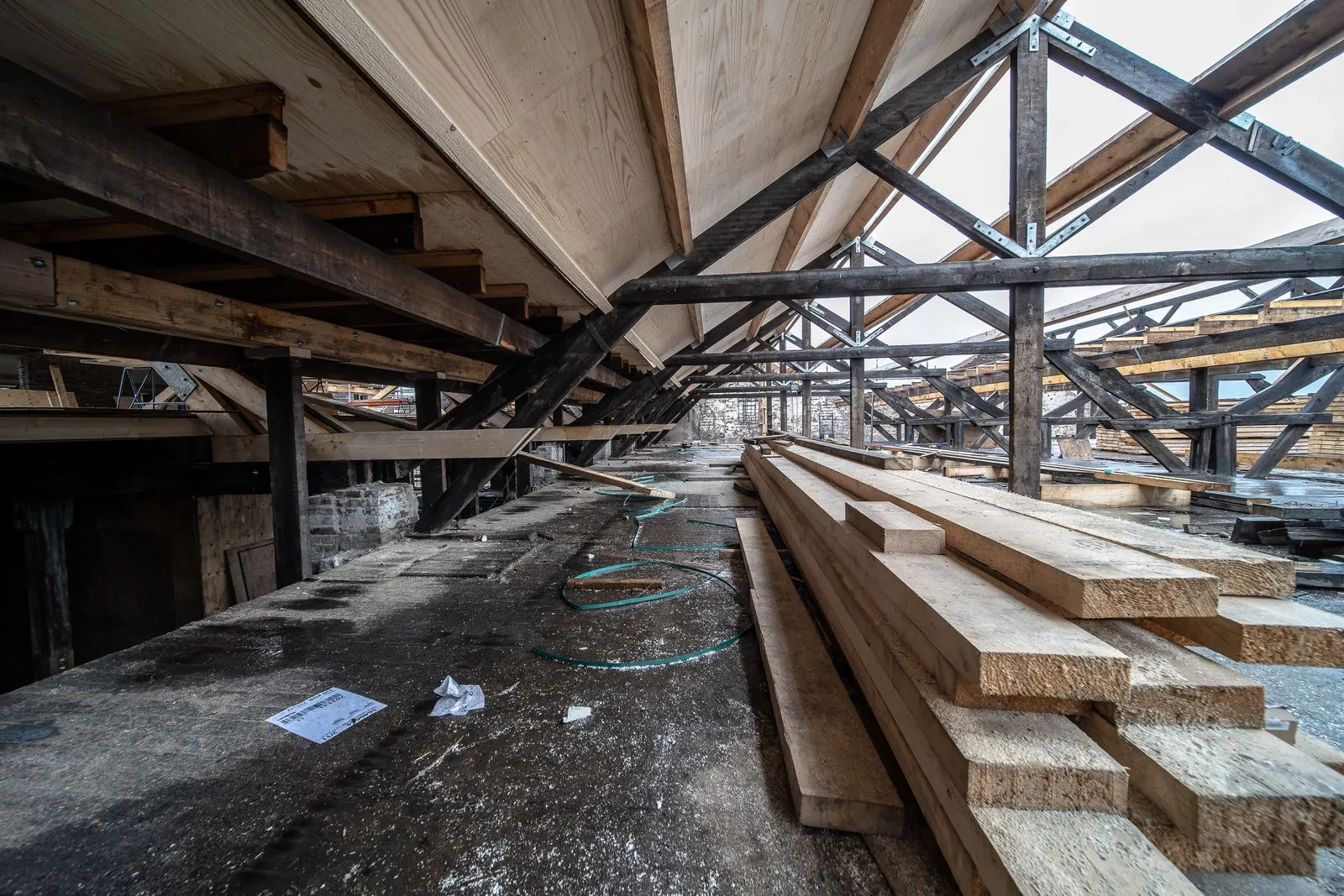
The Property Care Association says spray foam "completely obscures the underlying roof structure". Damage that builds up slowly under foam can be hard to see, and how a policy treats gradual deterioration is set by its own terms.

Moisture
- Condensation
- Damp timbers
- Install quality varies
RICS notes that, as with all insulation, poor installation can lead to unintended problems with damp and condensation. Our guide to whether spray foam insulation is bad covers the moisture evidence in more detail.
Disclosure
Do I have to tell my insurer about spray foam?
If your insurer asks about your roof, insulation or alterations, you must answer accurately. Under section 2 of the Consumer Insurance (Disclosure and Representations) Act 2012, it is your duty "to take reasonable care not to make a misrepresentation to the insurer" when you buy or change a policy.
In short: answer the insurer's questions carefully and check your policy terms for anything you must report.
The Financial Ombudsman Service (page checked November 2026) says the insurer's questions "should be clear", and that usually the only time you have to give information is when you buy or renew a policy, although your policy terms might say you need to tell the insurer about changes. If you're unsure whether spray foam is covered by a question, ask the insurer and keep a note of the answer. What can happen if an answer turns out to be wrong depends on whether the mistake was careless or deliberate, as set out in Schedule 1 of the Act.
| Type of misrepresentation | What the insurer can do |
|---|---|
| Deliberate or reckless | Avoid the policy, refuse all claims and keep the premiums (unless that would be unfair) |
| Careless, and the insurer would not have offered cover at all | Avoid the policy and refuse claims, but return the premiums |
| Careless, and the insurer would have used different terms | Treat the policy as if it had those terms, such as an exclusion |
| Careless, and the insurer would have charged more | Pay claims proportionately, reflecting the premium it would have charged |
Source: Consumer Insurance (Disclosure and Representations) Act 2012, Schedule 1, legislation.gov.uk. The Ombudsman says that if an insurer thinks a misrepresentation was deliberate or reckless, it needs to show why. This is general information, not legal advice.
If you're refused
What if an insurer won't cover a house with spray foam?
If one insurer refuses cover or adds conditions because of spray foam, try others or use a specialist broker. The British Insurance Brokers' Association (BIBA) runs a free Find Insurance service (checked November 2026) that puts people who struggle to get cover in touch with specialist brokers, by phone or through an online search.
Ask the insurer to say exactly what it needs to see. Often the answer is evidence about the foam and the condition of the roof. The RICS guide recommends keeping the installation contract, any guarantee or warranty and any independent test certificate (for example BBA or Kiwa), and says the same paperwork helps with questions from a valuer or lender. If you're also dealing with a sale or remortgage, our guide to spray foam and your mortgage covers what lenders ask for.
- An independent inspection report, ideally from a surveyor on the PCA's register of spray foam assessors
- The installer's paperwork: contract, product details, guarantee or warranty and any test certificate
- Photos of the roof space, inside and out
- If the foam has been taken out, a removal record with before and after photos and the condition of the timbers
Insurance worries are used by cold callers
Some doorstep and phone sellers use fears about insurance or selling to rush people into removal. Check anyone who contacts you out of the blue, and read our guide to spotting a spray foam removal scam before agreeing to anything.

Removal
Will removing spray foam sort out my insurance?
Removing spray foam may make an insurer's questions easier to answer, but nobody can promise an insurer will change its terms afterwards. RICS (March 2023) notes spray foam is not easily reversible, and Trading Standards in Cornwall (updated November 2026) says removal "is not always necessary". Get the roof assessed before deciding.
If removal is recommended, ask the insurer before work starts what evidence it would want, so the record you get afterwards answers its questions. Our spray foam removal service page explains how we work and what you get at the end, and the spray foam removal cost guide covers published price ranges.
Send us a photo from the loft hatchCompensation
Is there a spray foam compensation scheme in the UK?
There is no UK government compensation scheme for spray foam. In March 2026 the government confirmed to Homebuilding & Renovating that it will not provide direct financial help with removal. Redress for a poor installation runs through the installer, any guarantee and the complaints routes below.
Start with whoever fitted the foam, then escalate step by step.
Officials told Homebuilding & Renovating that any household with measures fitted under ECO or the Great British Insulation Scheme "is entitled to remediation for any non-compliant work (including any spray foam) through the original installer", and that all measures must have a guarantee. Citizens Advice (June 2025) found affected homeowners facing costs over £50,000 for removal or roof repairs, and called for a single ombudsman to provide redress, which shows there isn't one yet.
- Step 01
The original installer
Raise a written complaint with the installer and allow reasonable time to respond. Citizens Advice notes the Consumer Rights Act 2015 says work must be done with reasonable care and skill.
- Step 02
Your guarantee
Check the guarantee or warranty paperwork and who backs it. Which? (October 2026) says installers should provide a manufacturer or insurance-backed installation warranty.
- Step 03
TrustMark route
If the firm was TrustMark registered, TrustMark's process (checked November 2026) goes to the firm's scheme provider, then the Dispute Resolution Ombudsman after 12 weeks or a final response, within 12 months of your complaint.
- Step 04
Advice and court
Cornwall Trading Standards (November 2026) says you usually have up to 6 years from completion to claim. Citizens Advice can help, and GOV.UK explains small claims.
The GOV.UK court claim process covers England and Wales. Scotland and Northern Ireland have their own court processes, and consumer advice services differ in each nation. TrustMark's ombudsman can't look at firms that weren't registered when the work was done, or at compensation claims.
FAQs
Spray foam insurance questions
Answers based on the sources linked above. For your own policy, check the wording or ask your insurer or broker.
Not sure what's in your roof?
Send us one or two photos from the loft hatch and we'll explain what we can see.
Get adviceWill insurers cover a house with spray foam?
Some do, but policies differ. One insurer, the AA, told Homebuilding & Renovating in February 2025 that it doesn't ask about insulation type. Others may ask questions or set conditions, so read your policy and ask if you're unsure.
Can my insurer cancel my policy if I didn't mention spray foam?
Only in some cases. If you were asked a clear question and didn't take reasonable care answering it, the 2012 Act lets the insurer act according to what it would have done, from charging more to avoiding the policy. If it wasn't asked about, the Ombudsman says you usually only give information when buying or renewing, unless your policy terms say otherwise.
Should I tell my insurer before I have spray foam removed?
It's sensible to check your policy terms, because some require you to report building work. Asking first also lets you find out what evidence the insurer would want to see once the work is done.
Is spray foam a fire risk for insurance purposes?
RICS (March 2023) says polyurethane spray foam is combustible and typically rated Class E, and that in a fire it would increase the likelihood and extent of damage. That is why it advises checking your policy allows it.
Can I claim compensation for mis-sold spray foam?
There's no government compensation scheme. You may have rights under the Consumer Rights Act 2015 against the installer, and Trading Standards in Cornwall says you usually have up to 6 years from completion to make a claim. Citizens Advice can help you work out the next step.
Where can I find insurance if I keep getting refused?
Try a specialist broker. BIBA's free Find Insurance service connects people who struggle to get cover with brokers who handle less standard risks. Have your inspection report and installer paperwork ready.